
Unlocking the Power of IoT Technologies in Manufacturing
Explore scalable IoT technologies by the Consortium of IoT in Manufacturing, driving innovation in industrial digital transformation.
Enabling IoT Technologies
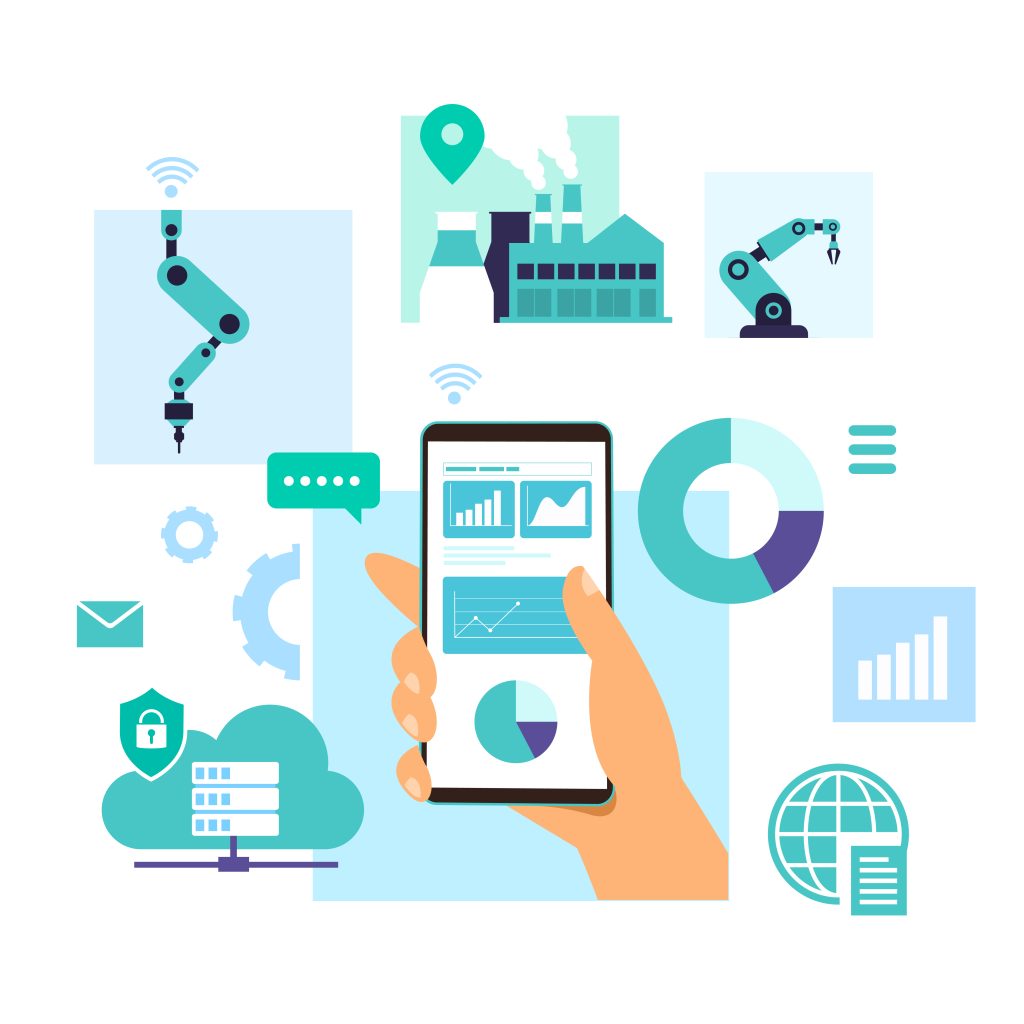
Delivering scalable, real-world IoT solutions requires more than just technologies. It demands collaboration, shared expertise, and a strong commitment to impact. Across North America, the Consortium of IoT in Manufacturing is building a trusted B2B network dedicated to transforming manufacturing through connected, intelligent systems. Our members work together to develop and deploy cutting-edge technologies from edge computing and smart sensors to robotics and real-time analytics, tailored to the unique challenges of industrial operations. We share tools, knowledge, and strategies to deliver seamless integration and high-value outcomes for our customers. With joint marketing and sales efforts, we expand our collective reach while staying focused on practical results. Based in Los Angeles, CA, Consortium of IoT in Manufacturing serves as the engine behind this collaborative force, helping manufacturers grow with confidence. Whether you’re looking to modernize your production lines or optimize energy use, we offer the expertise, solutions, and support to power your success.
Comprehensive List of IoT Technologies in Manufacturing
Smart Sensors and Actuators
These devices enable real-time monitoring and control of manufacturing equipment and processes by sensing various environmental and operational parameters and triggering necessary actions based on the input received.
- Temperature and Humidity Sensors
Measure the temperature and humidity levels in a given environment to ensure consistent conditions, which are vital for process control, equipment safety, and maintaining product quality.
- Vibration and Acoustic Sensors
Detect irregularities in machinery performance by monitoring vibrations and sound waves. These sensors help to identify issues such as wear, misalignment, or malfunction in mechanical systems.
- Pressure and Flow Sensors
Monitor and measure gas or fluid pressure and flow rates in systems like pipelines or hydraulic networks to maintain optimal operational conditions.
- Proximity and Motion Sensors
Used in automation and safety systems, these sensors detect the presence or movement of objects in the vicinity, such as in assembly lines or safety zones.
- Optical and Vision Sensors
Often employed in quality control applications, these sensors use cameras or lasers to visually inspect products, scan barcodes, or measure precise dimensions.

Industrial Communication Protocols
These protocols are essential for ensuring smooth communication between IoT devices, control systems, and enterprise-level platforms.
- Wired Protocols
These include established standards such as Modbus, PROFIBUS, EtherCAT, CANopen, and EtherNet/IP, which facilitate fast and reliable communication between devices in industrial environments.
- Wireless Protocols
BLE (Bluetooth Low Energy) A short-range, low-power wireless communication protocol typically used for wearable devices and local asset tracking.
Zigbee A low-power, low-data-rate wireless protocol ideal for mesh networking in large-scale deployments of sensors.
LoRaWAN A long-range, low-power protocol for applications where remote monitoring of devices is required, typically for outdoor or rural settings.
NB-IoT / LTE-M These cellular-based protocols are suited for low-power applications with wide-area coverage, such as monitoring industrial equipment.
5G URLLC The ultra-reliable low-latency communications offered by 5G are optimal for real-time robotics and automation systems where rapid response times are critical.
Edge Computing and Gateways
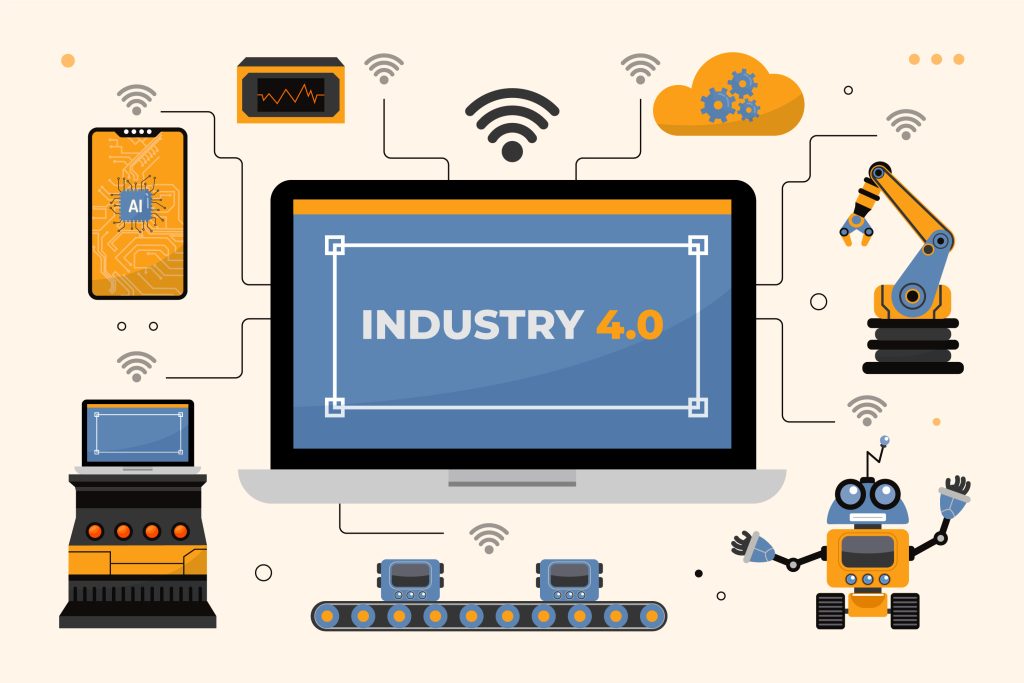
These technologies help to reduce latency and bandwidth requirements by processing data closer to the source of generation.
- IoT Edge Gateways
Devices that collect and preprocess sensor data locally before forwarding it to cloud systems, thus reducing data transfer and improving efficiency.
- Edge AI Devices
These devices are capable of running artificial intelligence models locally, providing immediate insights and reducing the dependency on cloud computing resources.
Digital Twins and Simulation
Virtual representations of physical systems for testing, optimization, and diagnostics.
- Digital Twins
Digital replicas of physical assets or entire production lines that are updated in real-time to reflect actual performance, aiding in simulation and predictive maintenance.
- Simulation Tools
Software tools like Ansys Twin Builder and Siemens NX that help simulate industrial processes, enabling scenario testing and process optimization without disrupting real-world operations.

Robotics and Autonomous Systems
Technologies that improve the precision, speed, and safety of tasks that are often repetitive or hazardous.
- Industrial Robots
Automated machines designed to perform high-volume, repetitive tasks like welding, painting, and packaging with precision and efficiency.
- Collaborative Robots (Cobots)
Robots designed to work alongside human workers in a safe manner, often equipped with sensors to adapt to changes in the work environment.

Real-Time Location Systems (RTLS)
These systems track the movement of assets, products, and personnel in real time, often using wireless technologies.
- RFID and NFC
Radio Frequency Identification and Near Field Communication are used to tag and identify objects and personnel in proximity to each other for tracking purposes.
- BLE and UWB Tags
Bluetooth Low Energy and Ultra-Wideband tags provide more precise and low-latency tracking capabilities, commonly used for fine-grained asset management.

Cyber-Physical Systems (CPS)
These systems combine physical processes with computational control, creating intelligent networks.
- Embedded Systems
Microcontroller-based systems integrated within machinery to provide specific control functions or automation tasks.
- Integrated Mechatronics
The combination of mechanical systems, sensors, actuators, and controllers into one unified system, allowing for more efficient and intelligent operations.

Asset and Workforce Management Systems
These systems track the status of assets and personnel to ensure optimal performance and safety.
- Asset Management Platforms
These tools track the status, usage, and maintenance schedules of industrial assets, ensuring that equipment remains in optimal working condition.
- Workforce Tracking Systems
These systems monitor the location and activities of workers, ensuring that they are safe and working within designated risk zones.

Additive Manufacturing Integration
The integration of IoT into 3D printing and other forms of digital fabrication allows for better control and optimization.
- 3D Printing with IoT Feedback
IoT-enabled sensors monitor the printing process in real-time, tracking parameters like material usage, print quality, and system health to ensure optimal printing results.

Smart Energy and Utilities Monitoring
These technologies optimize the usage of energy and other resources within industrial settings.
- Power Meters and Energy Analytics
Measure and track energy consumption at different levels (machine, process, or plant) to identify inefficiencies and optimize energy use.
- Smart HVAC and Lighting
Use sensors to detect occupancy and environmental conditions to automatically adjust heating, ventilation, air conditioning, and lighting for optimal efficiency.

These technologies form the backbone of modern smart factories and industrial systems, allowing for increased efficiency, safety, and innovation.
Reach out to the Consortium of IoT in Manufacturing today for support or collaboration opportunities
Contact Us to learn more, and let’s build the future of industrial innovation together.